Physical Address
304 North Cardinal St.
Dorchester Center, MA 02124
Physical Address
304 North Cardinal St.
Dorchester Center, MA 02124
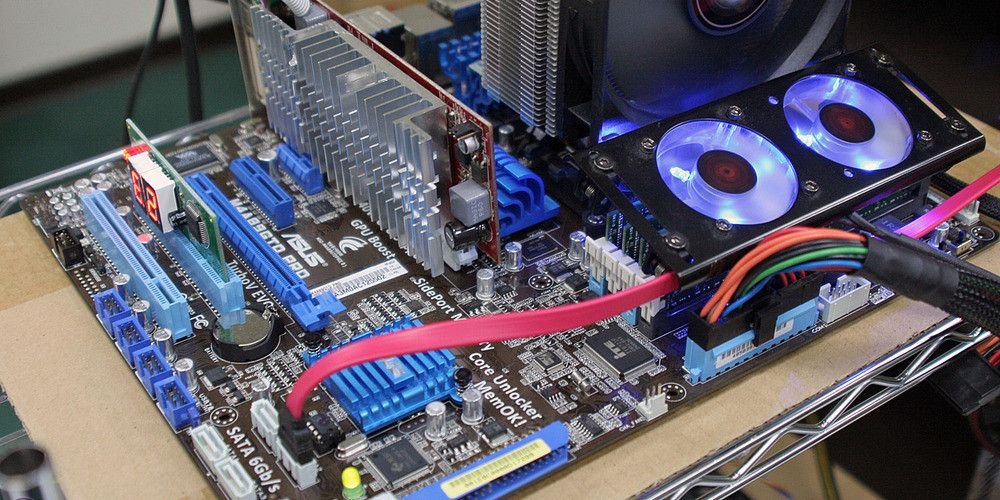
To overclock your CPU for gaming, focus on single-core speed rather than the all-core number on the box — and it is one of the cheapest ways to squeeze more frames out of a PC you already own. Games mostly use a few cores, so a higher boost clock on those cores matters far more than a higher speed on all of them.
Most games run their main thread on one core, and the frame rate follows that core’s speed. That is why the Ryzen 7 9800X3D is the fastest gaming chip even though its clock speed is not the highest — its 3D V-Cache matters more than raw speed. Our CPU benchmarks for gaming guide shows which numbers predict gaming performance, and our single-core vs multi-core benchmarks guide explains why the single-core score is the one to watch for games.
Before you change anything, measure your frame rate in the games you actually play — not a synthetic benchmark, but your game, at your settings. Write it down. Our how to benchmark your CPU guide shows you how to measure properly, and our best CPU benchmark software guide lists the tools. Without a baseline you will never know whether the overclock actually helped.
On an Intel K-series chip, raise the boost multiplier in small steps — see our how to overclock Intel CPUs guide. On a Ryzen chip, switch on PBO and tune Curve Optimizer — see our how to overclock AMD Ryzen CPUs guide. Do not chase a huge all-core overclock: it adds heat, and games will not use it. Our step-by-step overclocking guide and our overclocking basics guide cover the safe method in detail.
Test the overclock in your games, not just in a stress test. Play for an hour and watch for stutters, crashes and the frame rate. A chip that passes a 15-minute stress test can still crash in a game, because games load the CPU in a different way. Compare the frame rate with your baseline — if the gain is less than 5%, the overclock is probably not worth the extra heat. Our how to compare CPUs using benchmarks guide uses the same 5% rule, and our 7800X3D vs 9800X3D comparison shows how small the gaming gain between two fast chips can be.
Often, overclocking the CPU will not help at all, because the GPU is the bottleneck. If you play at 1440p or 4K, or with high graphics settings, the GPU does most of the work and the CPU waits for it. Our CPU bottleneck guide shows you how to check — if your GPU is at 99% and your CPU is at 50%, overclocking the CPU will change nothing. A Ryzen 5 9600X is already fast enough for most GPUs at 1440p, and our best CPU for 4K gaming guide makes the same point.
A gaming overclock is only worth it if the temperature stays in check — a hot chip will slow itself down, which defeats the purpose. Keep the temperature under 85°C under load, and read our cooling guides if heat is the problem. Our is overclocking worth it guide weighs the gain against the cost, and for many gamers the answer is to buy a better chip instead — see our best gaming CPUs guide.
Overclocking for gaming is about single-core speed, measured in your actual games, with the temperature under control. If the gain is real and the PC stays stable, keep it; if the GPU is the limit, save your time. Browse our overclocking guides and gaming CPU guides for the next steps.