Physical Address
304 North Cardinal St.
Dorchester Center, MA 02124
Physical Address
304 North Cardinal St.
Dorchester Center, MA 02124
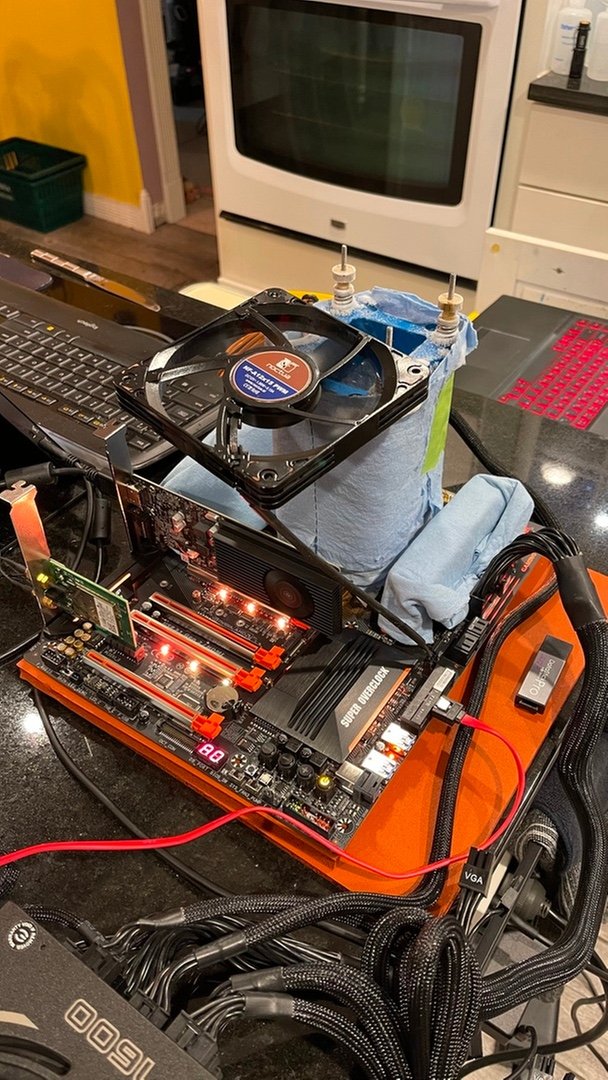
Asking is overclocking worth it in 2026 is really asking whether a few percent of free speed is worth the time, the heat and the extra cost of the parts — and the honest answer is: sometimes, but not always. It depends on what you do, what you own, and whether you enjoy tinkering.
A typical overclock gains 5–10% in benchmarks and a few percent in games. That is real, but it is also small — the difference between 100 and 105 frames per second is not something you will notice while playing. Our CPU benchmarks for gaming guide shows how small the real-world gain usually is, and our how to compare CPUs using benchmarks guide explains how to judge whether a gain is worth paying for. The gain is bigger in heavy multi-core work, where every core runs flat out, and smaller in games, where only a few cores matter.
Overclocking is not free. You need an unlocked chip, which costs more; a Z-series motherboard on the Intel side, which costs more; and better cooling, which costs more. Add it up and you may have spent $100–$200 extra for a 5% gain — money that could have bought a faster chip in the first place. It also costs time: an afternoon of testing, and the risk of a crash in the middle of a game or a render. Our overclocking basics guide and our step-by-step overclocking guide cover the time and the risks in detail.
Overclocking is worth it when you already own the parts: if you have a K-series chip and a Z-series board, the extra speed costs you nothing but an afternoon. It is also worth it on the AMD side, where PBO and Curve Optimizer are free and easy — see our how to overclock AMD Ryzen CPUs guide. And it is worth it if you enjoy tinkering: for many builders, the fun of tuning a chip is part of the hobby, and a Core i5-14600K with a modest overclock is a satisfying project.
Overclocking is not worth it if you are buying parts specifically to overclock. A faster chip at stock is almost always a better buy than a slower chip with an overclock — a Ryzen 7 9800X3D at stock will beat an overclocked Ryzen 7 9700X in games, and a Ryzen 9 9950X at stock will beat an overclocked 14900K in some work. It is also not worth it if your PC is used for work you get paid for, where stability matters more than speed, or if your cooling is weak. Our how to overclock Intel CPUs guide makes the same point: the premium parts cost more than the gain is worth.
If you want more speed, check first whether something else is holding you back — our CPU bottleneck guide shows how to tell. Often the bottleneck is the GPU, the RAM or the storage, not the CPU, and fixing that gives a bigger gain than any overclock. And if the CPU really is the limit, a better chip is the simpler answer — see our how much to spend on a CPU guide and our best desktop CPU guide.
Overclocking is worth it when it is free — when you already own unlocked parts and enjoy the tinkering. It is not worth it when you have to buy expensive parts to do it. Either way, it is a hobby, not a necessity: modern chips are already fast, and the best upgrade is usually a better chip, not a hotter one. Browse our overclocking guides and cooling guides for the next steps.